A brand-new filter should make your vents breathe easier, so a weaker push of air the morning after a swap feels backward. I'd look at the swap before anything else. When airflow drops the same day as an air filter replacement, the new filter or the way it went in is the likely reason, and you can usually spot it in about ten minutes.
When airflow fades over a few weeks instead, the story changes. That filter is quietly loading up with dust you can't see, and it simply needs changing sooner.
Start with the filter you just installed. It's the easiest suspect to clear.
TL;DR Quick Answers
Air Filter Replacement
Air filter replacement means swapping your HVAC filter on a steady schedule, using the exact size printed on the old frame and pointing the arrow toward the blower. If airflow drops right after a swap, check the fit and direction before you blame the MERV rating.
How often: Check the filter monthly. Replace most 1-inch filters every one to three months, and sooner if you have pets or run the system heavily.
Right size: Match the nominal size on the old frame, or measure the slot if the label has worn off.
Right direction: Point the airflow arrow toward the blower, meaning toward the furnace or air handler.
Before installing: Peel off the plastic wrap and check for crushed pleats or bent corners.
Pro Tip: Write the install date on the frame so you always know when the next swap is due.
Top Takeaways
Timing is your best clue. A same-day airflow drop usually traces back to the new filter or how it went in.
Most post-swap problems come from six mistakes: the wrong size, a backward arrow, a big MERV jump in a 1-inch slot, doubled filters, leftover wrap or crushed pleats, and the wrong depth.
Ten minutes spent checking size, direction, packaging, and return grilles clears up most cases.
At the same MERV rating, deeper filters usually resist airflow less because they spread air across more media.
When a correct filter still doesn't bring airflow back, a technician's static pressure test will show where the resistance is.
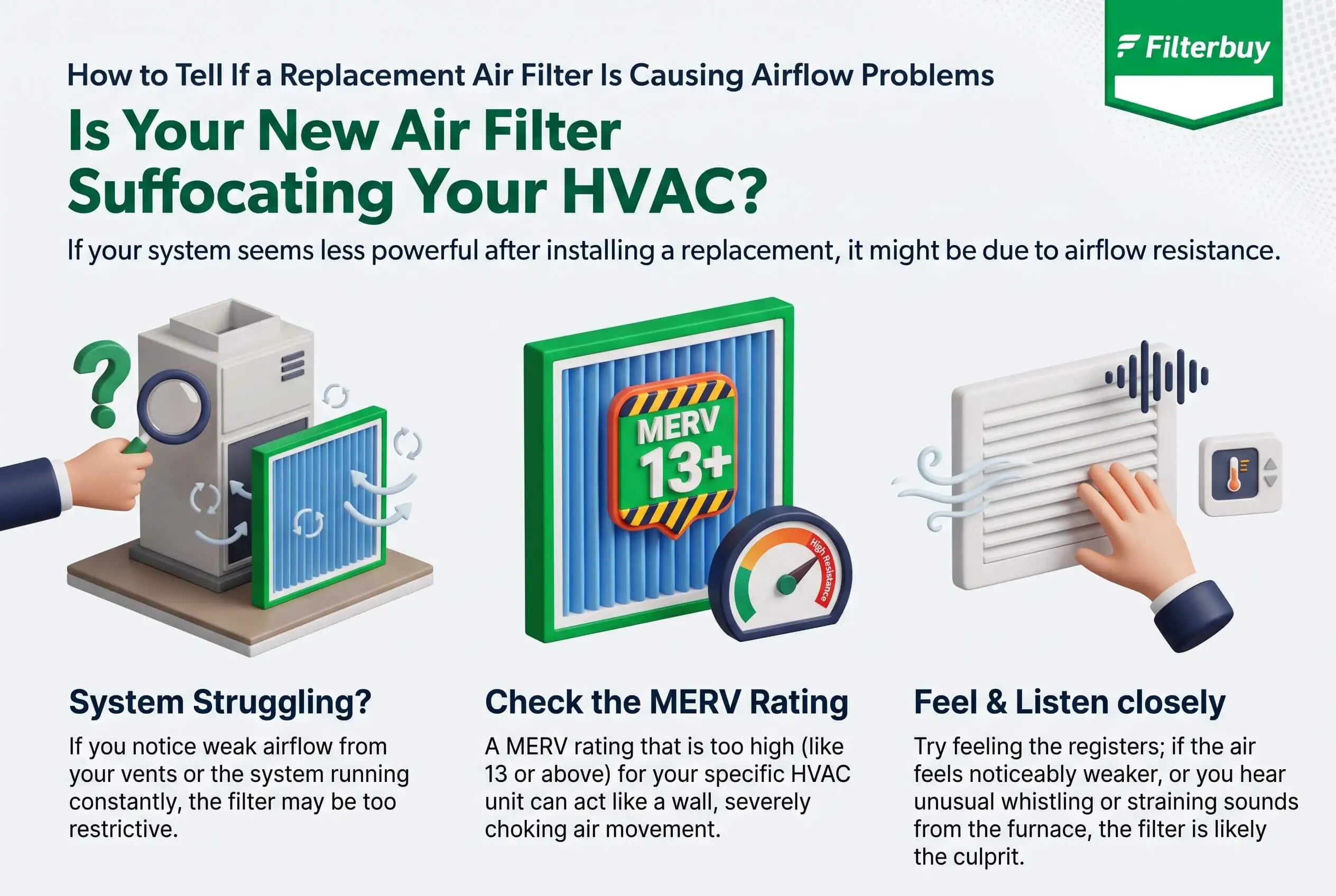
Signs Your New Filter Is Restricting Airflow
Your system usually speaks up within a day or two of a filter change. Here's what to listen and feel for:
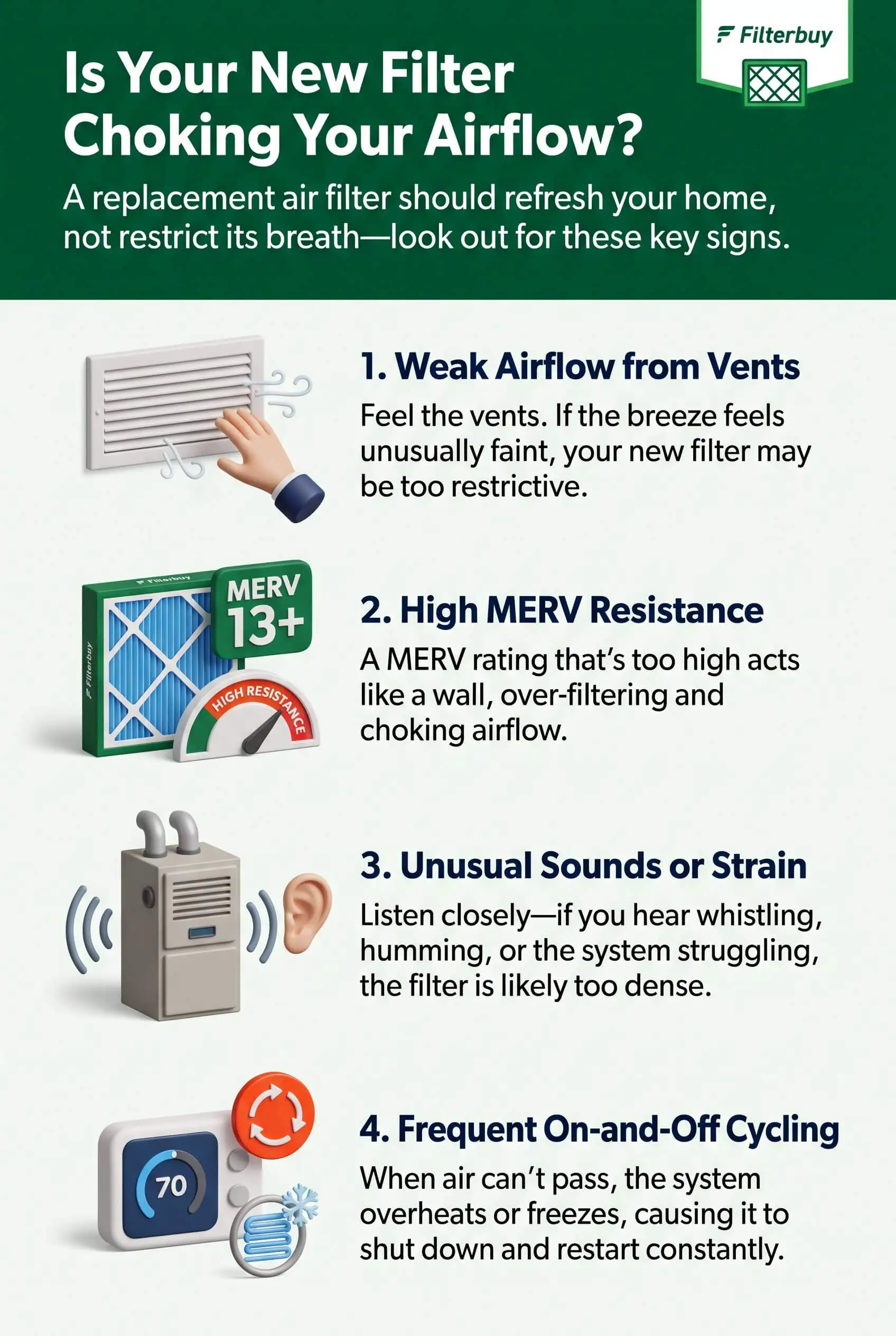
A whistle or sucking sound at the return grille or filter slot
Weak airflow at the supply vents, worst in the rooms farthest from the furnace or air handler
Run cycles that drag on before the thermostat is satisfied
Back bedrooms that stay chilly in winter or stuffy in summer
A furnace that shuts off mid-cycle, a sign the high limit switch may have tripped from overheating
Frost on the evaporator coil or refrigerant line during cooling season
Filter media bowing toward the blower side of the cabinet
See even one of these right after a swap? Go back to the filter first.
6 Air Filter Replacement Mistakes That Choke Airflow
Wrong Size or a Forced Fit
The size printed on a filter is nominal, which means a 16x25x1 often measures a little smaller so it slides into the slot. Go too big and you end up bending the filter into place, pinching the pleats shut. Go too small and air slips around the edges instead of passing through the media. Read the size on the old frame, measure the slot if the label has worn off, and pick replacement filters matched to your exact size and MERV rating.
Airflow Arrow Facing the Wrong Way
Find the arrow on the frame. It should point toward the blower, so toward the furnace or air handler and away from the return. Flip the filter around and the media and its support layers face the wrong direction, which adds resistance and can let the pleats deform. Not sure which way yours goes? This furnace filter direction checklist covers the common setups.
A Big MERV Jump in a 1-Inch Slot
Going from a basic fiberglass filter straight to MERV 13 asks a lot of a 1-inch slot. Higher MERV ratings catch smaller particles, and each added layer of filter media raises pressure drop. An older furnace with a PSC blower motor answers that extra resistance by moving less air. A variable-speed ECM blower fights to hold airflow, so you pay for it in energy use instead. This breakdown of how high-efficiency filters affect static pressure goes deeper on the tradeoff.
Two Filters in One Return Path
Some homes filter air twice, once at a wall or ceiling return grille and again at the furnace. Swap fresh filters into both spots and you've doubled the resistance on the return side without realizing it. Walk the house and check every return grille. Unless your system was designed for two, one filtration point usually does the job.
Plastic Wrap Left On or Crushed Pleats
It sounds obvious, and it still happens. Shrink wrap left on a new filter blocks nearly all airflow, so peel off the plastic and keep the cardboard frame. While the filter is out, check for dented corners or crushed pleats from shipping or a cramped garage shelf. Damaged media restricts flow and lets dust slip past.
The Wrong Depth for the Filter Cabinet
A media cabinet built for a 4-inch or 5-inch filter can't seal around a 1-inch one. The thin filter shifts or tilts, and air rushes past it. Match the depth the cabinet was built for. Deeper filters have an upside, too, since they spread air across more media and usually resist airflow less at the same MERV rating.
A 10-Minute Air Filter Replacement Check
Whenever airflow feels off after a swap, run through this:
Switch the system off at the thermostat.
Pull the new filter and make sure the plastic wrap is gone.
Compare the size on the frame with the old filter or your slot measurement.
Check that the arrow points toward the blower.
Look for bent corners, crushed pleats, or gaps along the edges.
Check every return grille for a second filter.
Reinstall the filter, close the access panel snugly, and run the fan for a few minutes.
Feel the nearest and farthest supply vents, and listen at the return for whistling.
If the air comes back strong, you've found your problem.
Pro Tip: Snap a phone photo of the old filter's label before it goes in the trash. Next time, the exact size and MERV rating are waiting in your camera roll.
When It's Not the Filter
Sometimes a filter change just lands in the same week as a different problem. A dirty evaporator coil, closed or blocked supply registers, undersized return ducts, or a weak blower motor or capacitor can all choke airflow on their own. When a correctly sized, correctly oriented filter doesn't fix things, ask an HVAC technician for a total static pressure test. With a manometer, the tech can see exactly where the resistance sits. You can also compare your symptoms with this guide on why a central AC runs but doesn't blow air.
"When a homeowner calls me the day after a filter change, I check the fit before I ever open up the furnace. A 1-inch MERV 13 jammed into a slot that's a quarter inch too small will bow into the blower and can starve return airflow enough to trip the high limit, and a correctly sized filter clears that up faster than dropping to a lower rating."
7 Essential Resources
What Is a MERV Rating? from the U.S. EPA lays out the MERV scale and recommends MERV 13 or the highest rating your system fan and filter slot can handle.
The DOE Building America Solution Center's High-MERV Filters guide shows how filter depth, pleat count, and pressure drop work together, with photos of correct arrow direction and wrap removal.
Residential Filtration Best Practice Guideline is the National Air Filtration Association's playbook for choosing, installing, and maintaining home HVAC filters.
DOE Energy Saver's Maintaining Your Air Conditioner explains how restricted airflow lets dirt bypass the filter and coat the evaporator coil, plus what a technician should check on a service visit.
The American Lung Association's Air Cleaning page covers filter-change timing and a quick white-paper test for spotting a dirty filter.
AirNow's Indoor Air Filtration Fact Sheet recommends confirming compatibility with a technician before you move up to a higher-efficiency filter.
Air Cleaning Devices for the Home from the California Air Resources Board explains why a filter has to seat tightly to stop bypass, and when to have your system checked before using MERV 9 or higher.
3 Supporting Statistics
About 30%: Improper installation could push a household's heating and cooling energy use up by roughly 30 percent, according to NIST researchers, who listed restricted airflow among the common faults they studied.
More than half: ENERGY STAR says more than half of HVAC systems in U.S. homes likely perform poorly because of one or more installation problems.
More than 3x: Lab testing published in Home Energy Magazine and hosted by InterNACHI found that a filter's pressure drop can more than triple once it's fully loaded with dust.
Final Thoughts and Opinion
Here's where I land. When airflow drops right after a filter change, I wouldn't blame the MERV rating on the box first. In those first 24 hours, fit, direction, and leftover packaging cause more trouble than filtration level ever does, and a clean, correctly sized MERV 8 filter runs fine in plenty of homes.
So keep it simple. Check the size, the arrow, and the wrap before you downgrade anything. Weak airflow that crept in over weeks is a timing problem, and a steady air filter replacement schedule takes care of it. This guide to how often to change your furnace filter is a smart place to set one up and stay ahead of it.
Frequently Asked Questions
Why Is Airflow Weaker Right After I Changed My Air Filter?
Usually the new filter is the wrong size, sits backward, still has its wrap on, or is much denser than the one you pulled out. Take it out, check all four, and slide it back in. If airflow stays weak with the right filter in place, the cause probably lives somewhere else in the system.
Can the Wrong Size Air Filter Damage My Furnace?
It can. Force an oversized filter into the slot and you can restrict airflow enough to overheat the furnace and trip the high limit switch. An undersized filter causes a slower problem, letting dust slip past and build up on the blower and evaporator coil over time.
Does It Matter Which Way an Air Filter Faces?
Yes. Point the arrow on the frame toward the blower, which means toward the furnace or air handler. A backward filter can deform under airflow, add resistance, and catch less of the dust and allergens you bought it to stop.
Should I Go Back to a Lower MERV Filter If Airflow Drops?
Not right away. Rule out size, direction, and packaging first, then look at filter depth. If a correctly installed high-MERV filter still chokes a 1-inch slot, a deeper media cabinet or a technician's static pressure reading will serve you better than giving up filtration.
How Long Should Airflow Take to Return to Normal After a Filter Change?
Immediately. A correctly installed filter should deliver steady airflow the moment the blower kicks on. Still feeling weak air after the first full cycle? Check the installation instead of waiting it out.
Get Strong Airflow Back After Your Next Filter Swap
Now you know how to tell when a replacement air filter is causing airflow problems in your gas furnace and how to fix it in about ten minutes. Write the size, arrow direction, and install date on every new frame, and your next swap will keep air moving through your home the way it should.