Swap a flimsy fiberglass filter for a MERV 13, and your blower has to push harder the moment it kicks on. That extra push is static pressure, and every high-efficiency furnace filter adds some. Don't panic. In a healthy system, the increase is small and the cleaner air is worth it.
Trouble starts with a mismatch: a dense filter in a thin slot, left in too long, on a blower already working near its limit. That combination can choke airflow. Knowing which side of the line your furnace sits on is how you protect your family's air and your HVAC system at the same time.
TL;DR Quick Answers
furnace filters
Furnace filters trap dust and pet dander before your blower circulates them, protecting your family’s air and your HVAC system. Pick them by MERV rating and slot depth. MERV 11 to 13 suits most homes. A dirty filter, though, strains your blower more than a high rating ever will.
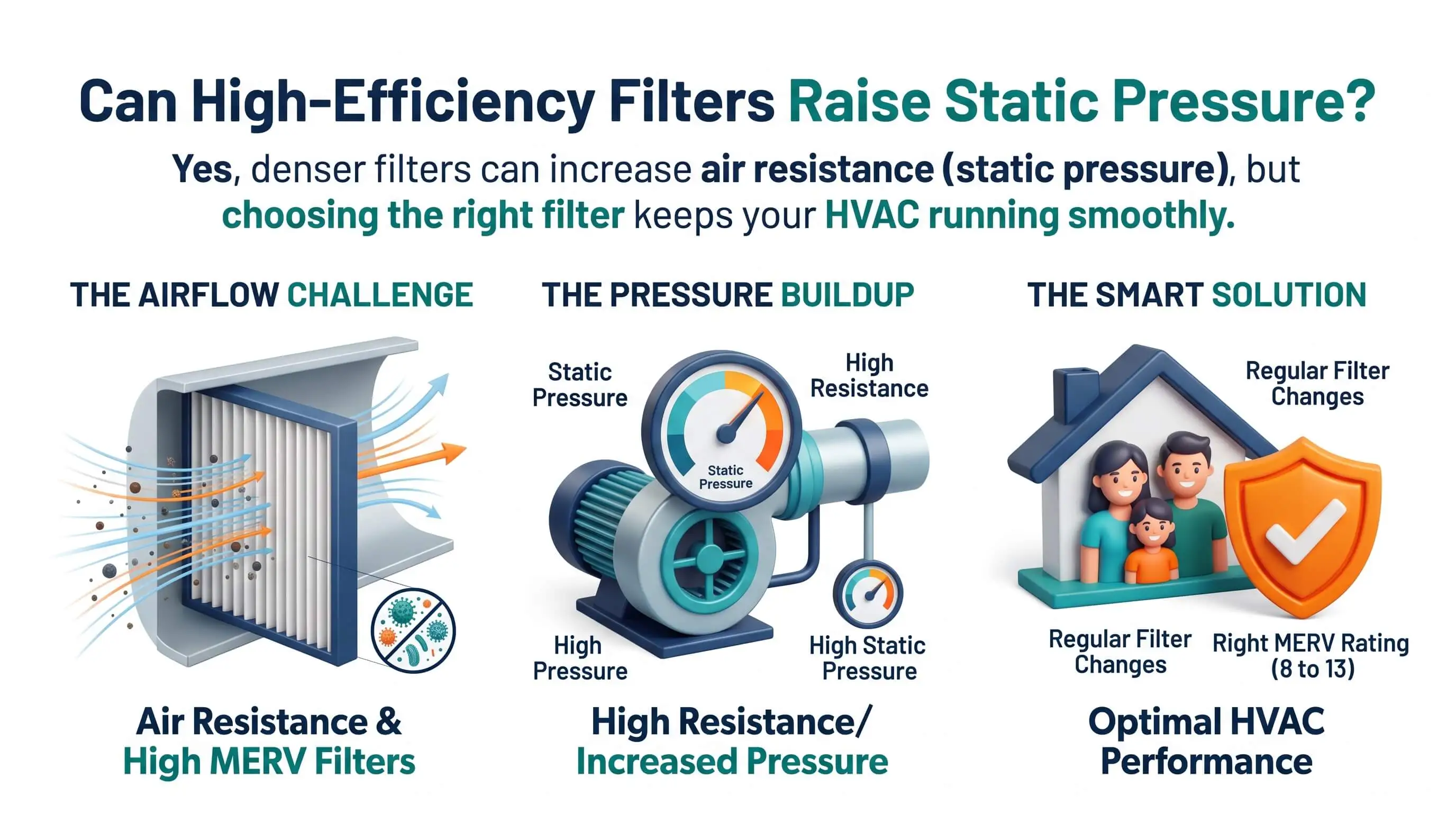
What MERV tells you: higher numbers catch smaller particles, and the denser media adds some airflow resistance.
The sweet spot for most homes: MERV 11 to 13. Field research tied this range to less than a 1% change in energy use.
Depth matters as much as rating: a 4-inch media filter spreads air across more material than a 1-inch filter, so it pushes back less.
Timing beats rating: a clogged filter restricts more air than a clean high-MERV one. You can’t see it loading up from the vent, so check it monthly and replace 1-inch filters every one to three months.
The payoff you won’t see coming: swapping a clogged filter for a clean one can cut air conditioner energy use by 5% to 15%.
Top Takeaways
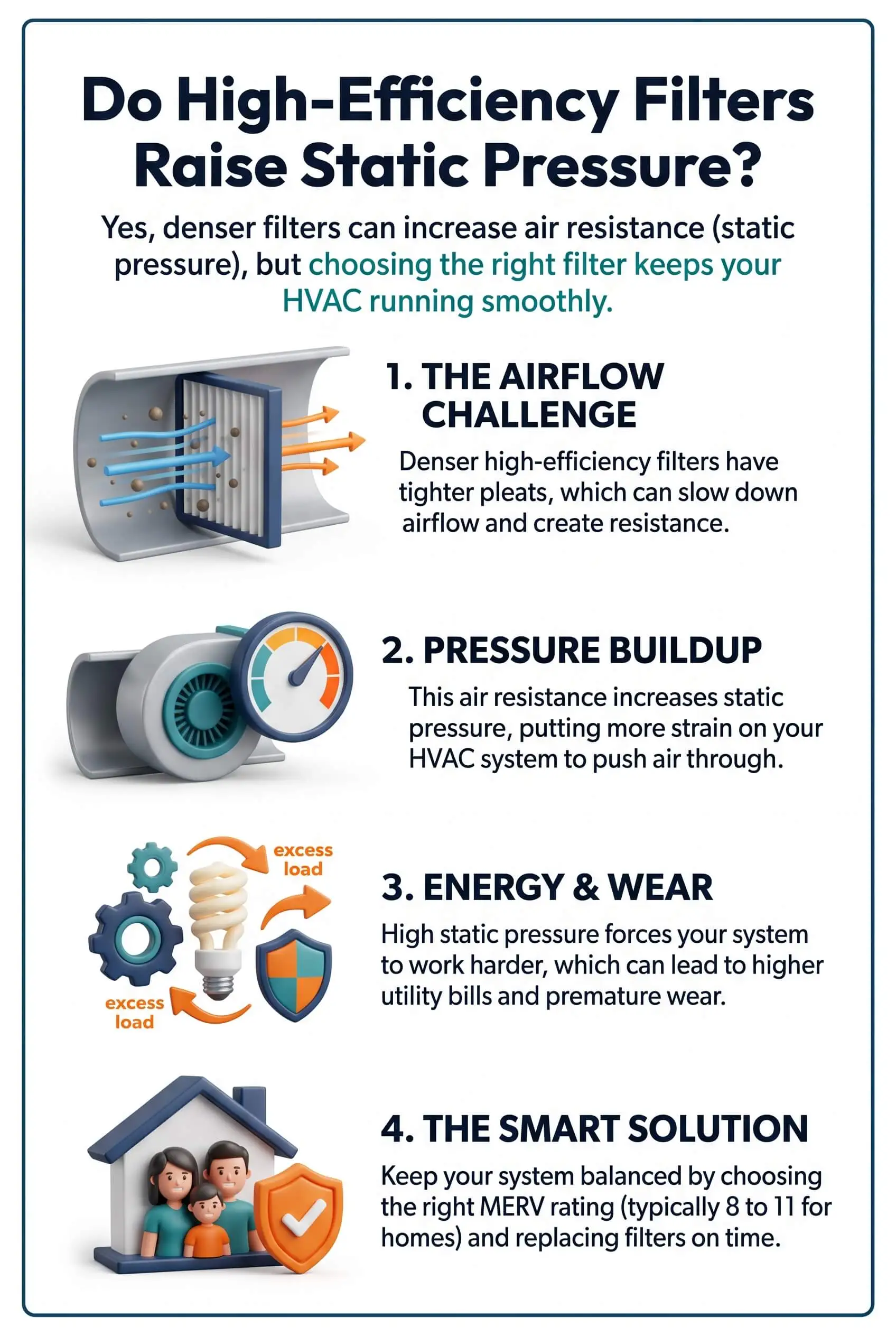
High-efficiency furnace filters raise static pressure a little, because denser media resists airflow.
In field research, MERV 10 to 13 filters moved energy use by less than 1%. MERV 16 is where blowers start to struggle.
A dirty low-MERV filter can restrict more air than a clean high-MERV one.
Deeper 4-inch media filters give you high filtration with less resistance than 1-inch filters.
For a definitive answer on your system, ask a technician for a static pressure test.
What Static Pressure Means for Your Furnace
Static pressure is the resistance air runs into as your blower pushes it through the filter, coil, and ducts. Technicians measure it in inches of water column, written as in. w.c.
Picture a budget. The manufacturer rates your furnace for a set total, and every component spends a piece of it. For gas furnaces, stay under that rating and air moves the way the engineers intended. Go over, and the blower either delivers less air or burns more energy trying to keep up. Your filter is the one line item you can change in two minutes, so it deserves a close look.
Why Higher-MERV Furnace Filters Add Resistance
A filter's MERV rating, on a scale of 1 to 16, tells you how well it catches particles between 0.3 and 10 microns. Higher numbers mean tighter media. Tighter media pushes back, and filtration research shows that pressure drop climbs as filtration efficiency rises.
Filter design gives you two ways around that trade-off:
More pleats: spreading the same airflow across extra media means each square inch works less hard.
More depth: a 4-inch media filter packs far more material into the same opening, so it often resists airflow less than a lower-rated 1-inch filter.
Is a Dirty Filter Worse Than a High-MERV Filter?
Often, yes. Every filter grows more restrictive as dust and pet hair pile up on it, and you can't see that buildup until you pull the filter out. A clean MERV 13 can let more air through than a MERV 8 that's been sitting in the slot for months.
Here's the good news. Replacement timing is the part you control. High-efficiency filters catch more, so they can load faster in homes with pets or during wildfire season. Check yours once a month when your system is working hardest.
What Happens When Static Pressure Runs Too High
Your blower motor decides how the system responds:
PSC motors, found in many older furnaces, run at one fixed speed. More resistance means less air.
ECM (variable-speed) motors adjust to hold airflow steady, so more resistance means more electricity.
Neither outcome comes free. Watch for these signs that your filter, or the ductwork behind it, is pushing back too hard:
A whistle or rush of air at the filter slot or return grille
Weak airflow at the vents, especially in rooms far from the furnace
Long heating cycles while the back bedrooms stay chilly
A furnace that shuts down early when the high limit switch trips
An evaporator coil that freezes up during cooling season
How to Choose Furnace Filters Without Choking Airflow
You can have cleaner air and a healthy blower. Here's how to get both:
Read your equipment manual. Many manufacturers list a recommended filter type or a maximum filter pressure drop.
Measure the filter slot. A cabinet that takes a 4-inch media filter gives you high filtration with much less resistance. Not sure which way the filter faces? This furnace filter direction checklist walks you through it.
Start with MERV 11 or 13. Field research tied this range to minimal energy impact in most homes. For what it does for your air, read this breakdown of whether a MERV 13 filter is worth it.
Ask for a static pressure test. A technician with a manometer can read the pressure drop across your filter in a few minutes and tell you how much of the budget you have left.
Put replacements on a schedule. Base it on how fast your filters load, and use this guide to changing your furnace filter as your starting point.
Pro Tip: Write the install date on the filter frame with a marker. It takes five seconds, and the next time you open the cabinet you'll know exactly how long that filter has been on the job.
"I've tested enough residential systems to know the filter is rarely the whole story. When a clean 1-inch MERV 13 eats up half the blower's rated pressure, I fix it with a deeper filter rack or more return area, not a lower MERV rating."
7 Essential Resources
Pleated Furnace Filters in MERV 8, 11, and 13: Hundreds of filter sizes at three MERV levels, so you can match filtration to what your system can handle.
ENERGY STAR Maintenance Checklist: Monthly filter checks, plus how airflow problems drag down system efficiency.
ASHRAE Guidance for Residential Buildings: ASHRAE recommends MERV 13 or the best filter your system can accommodate.
NAFA Filtration for Residential HVAC: Best-practice guidance on choosing, installing, and maintaining home filters.
CARB Air Cleaning Devices for the Home: Covers MERV tiers and filter depth, and why a technician should confirm your system can handle added resistance.
AirNow Indoor Air Filtration Fact Sheet: How high-efficiency HVAC filters cut wildfire smoke indoors and when to check compatibility first.
Energy Implications of In-line Filtration in California Homes: Field research showing how PSC and variable-speed blowers react to high-MERV filters.
3 Supporting Statistics
Under 1%: Lawrence Berkeley National Laboratory researchers found MERV 10 to 13 filters changed energy use by less than 1% across a wide range of conditions, while MERV 16 filters could push it up by more than 5%. (Lawrence Berkeley National Laboratory)
5% to 15%: Swapping a clogged filter for a clean one can cut an air conditioner's energy use by 5% to 15%. (U.S. Department of Energy)
3x: A properly installed MERV 13 filter can remove roughly three times more fine particles than a MERV 8 filter. (U.S. Environmental Protection Agency)
Final Thoughts and Opinion
Here's where I land. Static pressure is a reason to choose a high-efficiency furnace filter carefully, and I wouldn't let it push anyone back to bargain fiberglass. MERV 11 and 13 filters put little measurable strain on most systems. Most of the trouble people pin on high MERV ratings actually traces back to filters left in too long and slots too thin for the job.
So when your furnace whistles or can't keep the far rooms warm, pull the filter before you blame the rating. Then ask a technician for a pressure reading. A filter that fits your system, and not just the opening, protects your family's air and your equipment in one move.
Frequently Asked Questions
Is MERV 13 too restrictive for my furnace?
For most systems with a correctly sized filter slot, no. The exceptions are older furnaces with PSC motors, undersized return ducts, or 1-inch slots already near their pressure limit. Check your manual or ask for a pressure test before you upgrade.
How do I know if my furnace filter is causing high static pressure?
Listen for whistling at the return, feel for weak airflow at the vents, and notice whether heating cycles are running longer. A technician can confirm it with a manometer reading across the filter.
Are 4-inch furnace filters better for airflow than 1-inch filters?
Usually. Extra depth spreads airflow across more media, so a 4-inch filter typically adds less resistance at the same MERV rating. It also lasts longer between changes.
Can a high-MERV filter damage my blower motor?
A clean, correctly sized filter is unlikely to. A clogged or mismatched one keeps static pressure high, and that makes the blower work harder and run hotter, which can shorten its life.
How often should I change high-efficiency furnace filters?
Check monthly. Most 1-inch filters need replacing every one to three months, and deeper media filters often go longer. Pets and smoke exposure call for more frequent changes.
Choose Furnace Filters That Protect Your Air and Your Airflow
A high-efficiency furnace filter only pushes static pressure into harmful territory when the filter, ducts, and blower fall out of balance. Match the filter's depth and MERV rating to your system, change it on a steady schedule, and you'll breathe cleaner air while your furnace moves it with ease.